VerifiedFact Checked
How are different types of eczema treated?

How are different types of eczema treated?

There are several types of eczema, and the treatments for them can vary. Skin conditions such as atopic dermatitis, contact dermatitis, discoid eczema and neurodermatitis all involve inflammation, but they can look and behave differently. So too can dyshidrotic eczema and seborrheic dermatitis.

Alexandra Cristina Cowell
Medically reviewed by
Alexandra Cristina Cowell, Writer & Clinical Content Reviewer
Go to
Medically reviewed by
Dr Alexandra Cristina Cowell
Writer & Clinical Content Reviewer
on May 29, 2025.
Meet Alexandra Cristina  
Alexandra Cristina

Last updated on Feb 20, 2026.
Was this article useful?

Because of this, treatments may vary. For example, discoid eczema may need antibiotics more often due to the risk of infection, whereas contact dermatitis treatment focuses on identifying and avoiding your triggers. Not sure what type you have? A healthcare professional can help diagnose it and recommend the right treatment for your skin.

Learn more about different eczema treatments here.

Summary
  • Eczema is a chronic condition that needs ongoing care to prevent infections, manage itching, and protect skin health.
  • Home remedies like oat baths and honey might help soothe symptoms, but they’re not a replacement for medical treatments.
  • Weeping eczema is often a sign of infection and could need antibiotics. Always see your doctor if you notice yellow crusts or fluid.
  • Triggers like soaps, dust, and stress can worsen eczema, so lifestyle changes often play a big role in managing it.
  • Different types of eczema may need different approaches, but moisturizers and topical steroids are key treatments for most.

Home remedies that can help with eczema

Manuka honey

Manuka honey has antimicrobial and anti-inflammatory properties. One small study found it improved eczema lesions and calmed immune system overactivity.

Aloe vera gel

Cools, hydrates, and soothes irritated skin. Evidence suggests it can help to heal wounds and support your immune system.

Oat baths (colloidal oatmeal)

Colloidal oatmeal helps reduce inflammation, itching, and skin dryness. Studies show it can improve eczema symptoms like roughness and scaling.

Wet wrap therapy

Wrapping a wet and dry layer of fabric onto affected skin, after bathing, moisturizing, and applying any ointments or creams, can help to rehydrate your skin. This technique can also help treatments to penetrate your skin more effectively.

Coconut oil

The fatty acids in coconut oil might help to reduce inflammation and restore the skin barrier. Studies also suggest it has antimicrobial properties, so it can help with infection.

Primrose oil

Thought to help reduce inflammation and itching but the research is inconclusive. Studies don’t support its efficacy for eczema.

Sunflower seed oil

Sunflower oil can help to reduce itch and ease inflammation. It also helps to reinforce the skin barrier and lock in moisture.

Dietary changes

Cutting out triggers like dairy or gluten can help some people, but the evidence is mixed. It can help some people with inflammation, but it’ll be different for everyone.

Probiotics

There’s some evidence that probiotics might reduce the chance of eczema in children if taken during pregnancy, but studies haven’t found evidence they can help existing eczema.

If you’re pregnant, it’s always best to talk to your doctor before starting any treatment.

Commonly used medications for the different types of eczema

What eczema treatment should I use?
Type of eczema Type of medication Advantages Time to clear flare up Prescription needed?
Atopic dermatitis (AD) Moisturizing creams with ceramides Strengthens the skin barrier and reduces flare-ups Ongoing preventive use No
Topical steroid cream (e.g. hydrocortisone, betamethasone) Easy to apply to inflamed patches; reduces redness and itch fast A few days to a week Mild: No Stronger: Yes
Biologics or phototherapy Long-term option for moderate/severe AD; targets inflammation at immune level Several weeks to see full effect Yes
Contact dermatitis Topical steroid cream (e.g. clobetasol for severe cases) Best for reducing redness and swelling quickly Usually within a week Mild: No Stronger: Yes
Barrier creams Protects skin from irritant exposure; strengthens skin barrier Use daily for prevention No
Dyshidrotic eczema Topical steroids (e.g. clobetasol) High-potency steroids are usually best for more severe cases of dyshidrotic eczema due to deeper skin penetration 1–2 weeks Yes
Moisturizers Stop the skin from becoming dry (generally used in combination with other treatments) 2-3 weeks No
Cool compresses with potassium permanganate Helps dry out fluid-filled blisters A few days Yes
Stasis dermatitis Topical corticosteroids + compression therapy Reduces swelling and skin inflammation; compression tackles root cause Several weeks Yes
Oral antibiotics or steroid tablets (if infected) Used for infection and severe inflammation 1-2 weeks Yes
Seborrheic dermatitis Antifungal shampoo (e.g. ketoconazole 1%); Also antifungal creams, lotions, foams, and gels First line treatment for seborrheic dermatitis; reduces yeast overgrowth A few washes to a week Over-the-counter and Rx options
Topical steroid or calcineurin inhibitor These are short-term treatments, to quickly clear up symptoms Within a few days Yes
Neurodermatitis Topical calcineurin inhibitors (e.g. tacrolimus) Non-steroid option that helps to break itch-scratch cycle 1–2 weeks Yes
Oral antihistamines Helps manage nighttime itch and improve sleep Within an hour No
Potent topical steroids Helps to soften thickened skin and reduce itch to break the cycle A few days to a week Yes
Nummular eczema Mid- to high-potency topical steroids (e.g. triamcinolone) Calms inflammation and itch; easy to apply A few days to a couple of weeks Yes
Phototherapy (UVB) Used for more widespread, stubborn cases Several sessions over weeks Yes

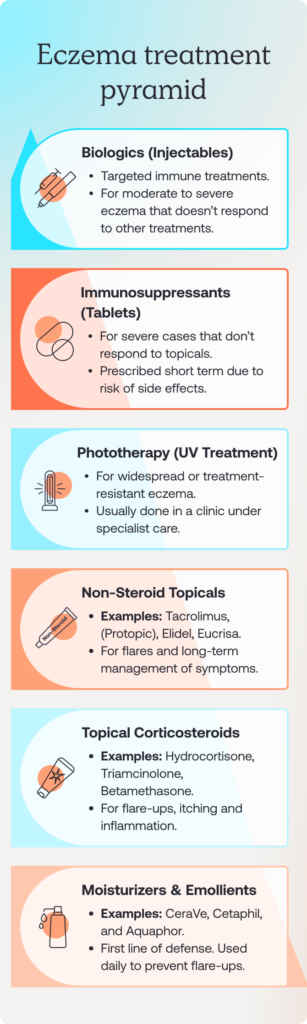
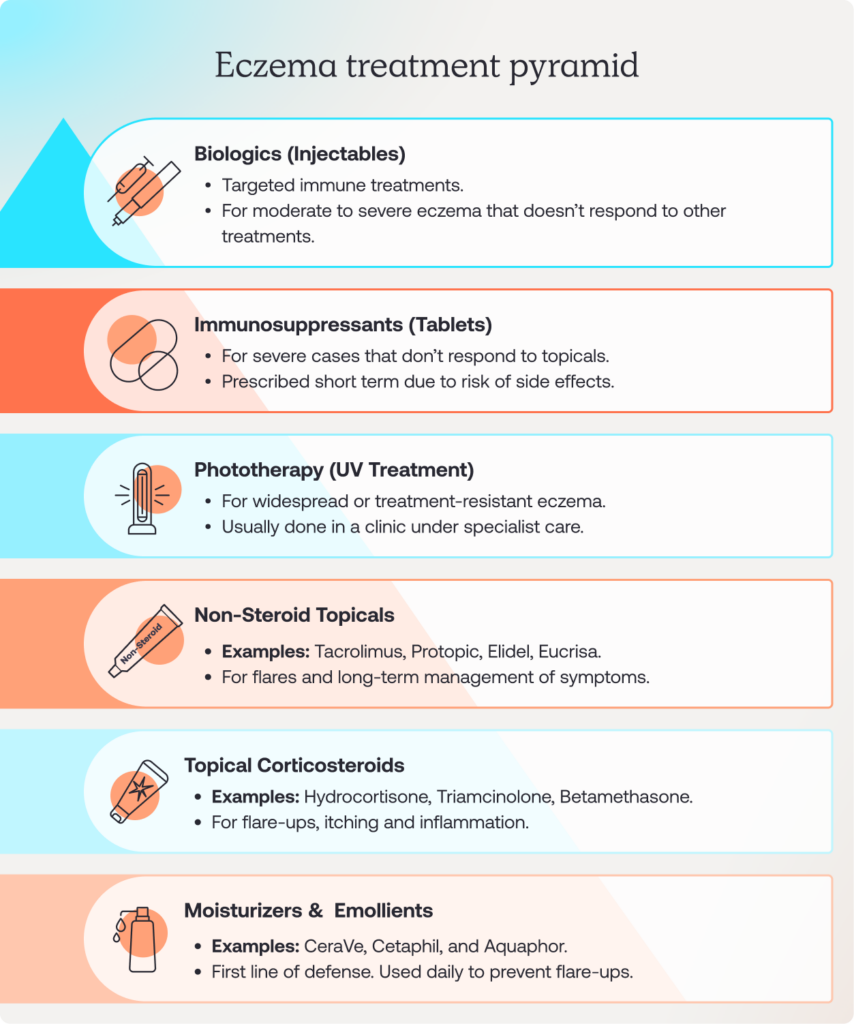
The Eczema Treatment Pyramid

What's the difference between weeping and infected eczema?

Weeping eczema refers to eczema patches that ooze clear or yellowish fluid. This weeping happens when inflamed skin becomes so irritated that fluid (called serum) leaks through the surface. It’s often (but not always) a sign that the skin barrier has broken down, allowing infection to develop.

Weeping can be caused by intense inflammation alone, but it’s most commonly a sign of an infection. When the skin is open or cracked from scratching or dryness, it becomes an easy entry point for bacteria, viruses, or fungi. Infected eczema tends to appear more swollen, painful, crusty, and red, and can spread quickly if left untreated. The most common bacterial infection is caused by Staphylococcus aureus. Viral infections like herpes simplex can cause more severe weeping and a serious condition called eczema herpeticum.

If your eczema starts weeping suddenly, especially with pain, fever, or spreading redness, it’s important to see a doctor.

How to help weeping eczema

The first step in managing weeping eczema is figuring out whether it’s infected.
Ways of treating weeping eczema include:

  • Antibiotics or antiviral medications: If your eczema is infected, a doctor could prescribe oral or topical antibiotics, or antivirals.
  • Avoiding soaps and detergents: Products like bubble baths, shower gels, and wet wipes can irritate sensitive or broken skin, even if they seem mild. Try switching to soap substitutes like moisturizing cleansers.
  • Gentle bathing: A daily lukewarm bath or shower using an emollient cleanser can help soothe and hydrate your skin. Apply moisturizers and any prescribed treatments straight after drying off to help seal in moisture.
  • Antihistamines: These can help reduce itchiness and discomfort, especially at night, but they won’t treat the underlying cause. They can be useful alongside other treatments.
  • Protecting your skin: Cuts and cracks can trigger or worsen weeping eczema. Wear gloves for household tasks and keep fingernails short and clean to reduce the risk of scratching or infection.

Always follow your treatment plan and speak to a healthcare professional if your symptoms get worse or don’t improve.

How to help itching eczema

  • Anti-itch creams: Products like Eucerin, CeraVe Itch Relief, or Aveeno contain soothing ingredients that can help reduce itch and moisturize the skin.
  • Moisturizers: An essential for eczema management. They form a protective barrier on the skin, locking in moisture and preventing further dryness. Common options include CeraVe, Cetaphil, and Vanicream.
  • Topical steroids: For flare-ups, steroids help reduce redness, swelling, and itchiness. These can include Hydrocortisone, Triamcinolone, or Clobetasol.

Some home remedies include:

  • Applying a cool compress (like a clean damp washcloth) to itchy areas to quickly calm the skin.
  • Keeping your nails short to avoid breaking the skin if you do scratch.
  • Wearing loose, soft clothing made from breathable fabrics like cotton to prevent further irritation.

What happens if eczema is left untreated?

If eczema is left untreated, it can lead to more serious problems over time.

When the skin remains inflamed and damaged, it becomes more vulnerable to infections. Bacteria like Staphylococcus aureus can enter through cracks or open wounds, leading to weeping, crusting, and worsening redness. In some cases, viral infections such as herpes simplex can cause a serious flare-up called eczema herpeticum, which needs urgent medical attention.

Long-term scratching and inflammation can also lead to scarring or skin thickening (a condition called lichenification), which makes eczema harder to manage and treat.

Beyond the potential for infection, untreated eczema often causes sleep problems, especially in children. It can also negatively impact your mental health, which can lead to anxiety and low mood.

It’s important to get the right support early. Effective treatment can relieve your symptoms, reduce flare-ups, and help protect your skin.

Don’t wait for it to get worse – explore eczema treatment options or speak to your doctor.

Reference Popover #ref1
Reference Popover #ref2
Reference Popover #ref3
Reference Popover #ref4
Reference Popover #ref5
Reference Popover #ref6
Reference Popover #ref7
Reference Popover #ref8
Reference Popover #ref9
Reference Popover #ref10

Sourcing guidelines:

When we present you with stats, data, opinion or a consensus, we’ll tell you where this came from. And we’ll only present data as clinically reliable if it’s come from a reputable source, such as a state or government-funded health body, a peer-reviewed medical journal, or a recognised analytics or data body. Read more in our editorial policy.

Tell us what you want to hear.

Have a subject you’d like us to cover in a future article? Let us know.

Give us the inbox treatment.

We're making healthcare more about you. Sign up to our newsletter for personalized health articles that make a difference.

Disclaimer: The information provided on this page is not a substitute for professional medical advice, diagnosis, or treatment. If you have any questions or concerns about your health, please talk to a doctor.

Suggest a health guide

Tell us your idea here.

(And leave your email too, so we can let you know if we write an article based on your suggestion.)