

VerifiedFact Checked
How can you prevent eczema flare ups?

How can you prevent eczema flare ups?

Eczema is a 'catch-all' term for 8 different skin conditions: atopic dermatitis, contact dermatitis, dyshidrotic eczema, nummular eczema, neurodermatitis, seborrheic dermatitis, stasis dermatitis, and perioral dermatitis.

No matter which type you have, flare ups can happen when something irritates or stresses the skin. Sometimes it’s obvious, like coming into contact with a known allergen, or a scented soap or laundry detergent. Other times, it’s something you might not initially recognise, like changes in the weather, wearing scratchy clothes, or feeling stressed out.

Alexandra Cristina Cowell
Medically reviewed by
Alexandra Cristina Cowell, Writer & Clinical Content Reviewer

Understanding your triggers is one of the best ways to prevent eczema flare ups. Small changes in daily habits, like moisturizing often, choosing gentle skin products, and protecting your skin from extreme temperatures, can all make a big difference.

Go to
Medically reviewed by
Dr Alexandra Cristina Cowell
Writer & Clinical Content Reviewer
on May 08, 2025.
Meet Alexandra Cristina  
Alexandra Cristina

Last updated on May 07, 2025.

Was this article useful?
1 people found this helpful

Summary:

  • Eczema flare ups are often caused by triggers like irritants, allergens, stress, and sudden changes in weather.
  • Everyday habits, like wearing certain materials or using certain products, can unknowingly worsen your symptoms.
  • Identifying and avoiding your triggers can help keep eczema under control.
  • Gentle skincare routines, moisturizing daily, and protecting the skin barrier are essential to preventing flare ups.
  • It’s important to stay consistent with your routine, even if your skin feels better.

Who is more likely to get eczema?

Eczema can affect anyone, but certain factors make it more likely. Here’s what we know about the factors that can affect your risk:

Age

Eczema is most common in babies and young children, often appearing in the first year of life. Many children outgrow it, but not always. There’s also a second smaller peak in older adults, with new cases often appearing after age 50-60.

Gender

Boys are slightly more likely to have eczema during infancy. After early childhood, girls and women are more likely to develop eczema and experience flare ups. With age, rates between men and women even out again.

Race

People from Asian and Black ethnic backgrounds have a higher risk of eczema compared to those from White backgrounds. Genetic differences in the skin barrier and inflammatory pathways could be the reason for this.

Living conditions

Living in a city or urban area increases the risk of eczema. Higher levels of air pollution, indoor heating, and closer contact with irritants like cleaning chemicals can all trigger eczema. People from lower-income backgrounds may also experience more eczema during adulthood. In infancy though, eczema was slightly more common in those from wealthier backgrounds.

Sudden weather changes

Sudden drops in temperature, cold dry air, and harsh winter weather can cause eczema flare ups. Low humidity dries out the skin, while heat and sweat can also irritate it. Living in areas with extreme seasonal changes can make eczema harder to manage.

Pre-existing allergies

If you have allergies like hay fever, asthma, or food allergies, you’re more likely to develop eczema. These conditions are all part of what doctors call the "atopic triad" - they often go hand in hand because of the way the immune system reacts to everyday triggers.

Genetics

A family history of eczema, asthma, or allergies increases your risk. Some people have a mutation in the filaggrin (FLG) gene, which helps protect the skin’s barrier. When this barrier doesn’t work properly, it’s easier for irritants, allergens, and microbes to get in, which is a contributing factor of eczema.


Ways you could be causing flare ups unknowingly

Possible trigger How it can affect eczema
Stress Stress can trigger your body’s inflammatory response, which can worsen itch and cause flare ups.
Illness (like a cold) Illnesses can weaken your immune system, making your skin more sensitive to other triggers.
Air pollution Chemicals and irritants in the air can irritate your skin and weaken its natural barrier.
Changes in temperature Moving too quickly from hot to cold (or vice versa) can dry out your skin, causing more inflammation.
Harsh soaps and detergents Strong cleaning products can irritate or damage your skin’s protective barrier.
Hot showers and baths Hot water strips natural oils from your skin, making it dry and more prone to eczema.
Sweating Rough fabrics can rub against the skin and cause irritation and flare ups.
Hard water Water with high mineral content can dry out your skin and make it more sensitive.
Allergen exposure Contact with allergens like dust mites, pet dander, pollen or certain foods can trigger inflammation.

How to prevent eczema

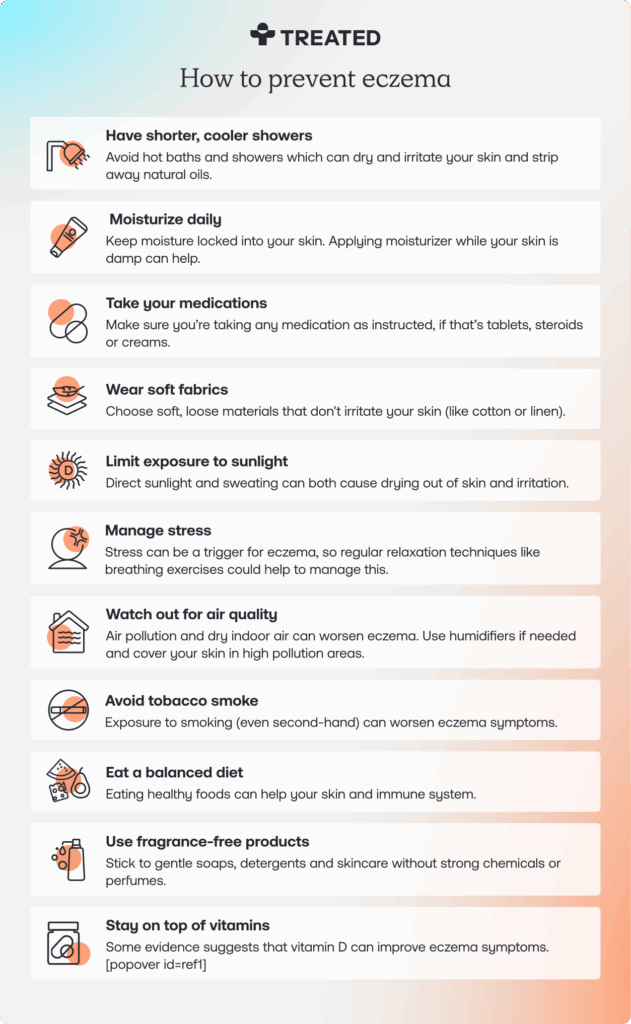
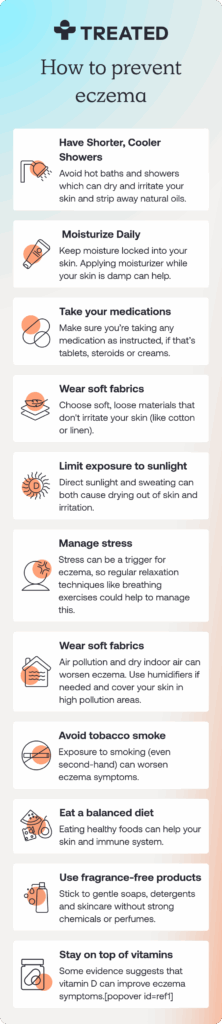
Infographic illustrating ways to prevent eczema flare ups. Visual: Showerhead image Label: Have shorter, cooler showers. Text: Avoid hot baths and showers which can dry and irritate your skin and strip away natural oils. Visual: Dollop of lotion Label: Moisturize daily Text: Keep moisture locked into your skin. Applying moisturizer while your skin is damp can help. Visual: Pill next to clock Label: Take your medications Text: Make sure you’re taking any medication as instructed, if that’s tablets, steroids or creams. Visual: T-shirt Label: Wear soft fabrics Text: Choose soft, loose materials that don't irritate your skin (like cotton or linen). Visual: Sun Label: Limit exposure to sunlight Text: Direct sunlight and sweating can both cause drying out of skin and irritation. Visual: Relaxed face Label: Manage stress Text: Stress can be a trigger for eczema, so regular relaxation techniques like breathing exercises could help to manage this. Visual: Green plants Label: Watch out for air quality Text: Air pollution and dry indoor air can worsen eczema. Use humidifiers if needed and cover your skin in high pollution areas. Visual: No smoking sign Label: Avoid tobacco smoke Text: Exposure to smoking (even second-hand) can worsen eczema symptoms. Visual: Fruits and veg Label: Eat a balanced diet Text: Eating healthy foods can help your skin and immune system. Visual: Soap bottle Label: Use fragrance-free products Text: Stick to gentle soaps, detergents and skincare without strong chemicals or perfumes. Visual: Bottle of vitamins Label: Stay on top of vitamins Text: Some evidence suggests that vitamin D can improve eczema symptoms.
Reference Popover #ref3
Reference Popover #ref2
Reference Popover #ref1

Sourcing guidelines:

When we present you with stats, data, opinion or a consensus, we’ll tell you where this came from. And we’ll only present data as clinically reliable if it’s come from a reputable source, such as a state or government-funded health body, a peer-reviewed medical journal, or a recognised analytics or data body. Read more in our editorial policy.

Tell us what you want to hear.

Have a subject you’d like us to cover in a future article? Let us know.

Give us the inbox treatment.

We're making healthcare more about you. Sign up to our newsletter for personalized health articles that make a difference.

Disclaimer: The information provided on this page is not a substitute for professional medical advice, diagnosis, or treatment. If you have any questions or concerns about your health, please talk to a doctor.

Suggest a health guide

Tell us your idea here.

(And leave your email too, so we can let you know if we write an article based on your suggestion.)